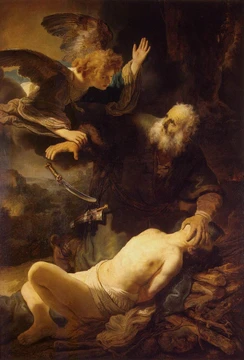
Basement
The first crack in the floor is the first crack in the mind.

The Basement is the first floor Isaac descends into in The Binding of Isaac, entered through a jagged hole in the floor of his bedroom. It serves as the player's initial trial—a cramped, dimly lit warren of rooms where the most basic horrors of Isaac's fractured psyche make their debut. Every run begins here, making it the emotional and mechanical foundation of the entire descent.
Visually, the Basement is distinguished by its dark, earthy palette of browns and muted greys, giving it a claustrophobic, subterranean feel that sets it apart from the Caves and Depths below. It is where players first learn the rhythm of room-to-room combat, item acquisition, and the ever-present dread of the boss room lurking at the bottom of the grid.
- Floor
- 1 (first floor)
- Entry point
- Hole in Isaac's bedroom floor
- Signature boss (original)
- The Lamb
- Visual palette
- Dark brown, muted grey, earthy tones
- Room types present
- Standard, Boss, Treasure, Secret
- Narrative role
- First layer of Isaac's subconscious
Lore & Background
In the mythology of the Binding, the Basement represents the outermost stratum of Isaac's repressed self—the raw, unfiltered id that surfaces the moment he stops pretending everything is fine. It is not yet the deep, architectural Caves of structured trauma, nor the abyssal Depths where identity dissolves; it is simply the dirt beneath the carpet, the things he kicked under the bed and told himself were gone.
The creatures that populate these rooms—gnat-like Flies, writhing Leeches, shambling Gapers—feel almost mundane, almost like household pests magnified to monstrous scale. This is deliberate: the Basement's horrors are the small, daily cruelties that built the larger wound. They are the things a child notices first, the little stings that accumulate into a bleeding sores.
The Lamb, the Basement's most iconic guardian, is a figure of twisted innocence. Its bleating, its grotesque grin, its relentless charge—these are the memories Isaac cannot outrun, the ones that wear the face of something gentle and then bare its teeth. Defeating it does not heal the wound; it merely allows him to dig deeper.
In Their Own Story
The hole in the bedroom floor was there in the morning, and it was there in the afternoon, and by evening the house had gone quiet in the way houses go quiet when something has been taken. Isaac crouched at the lip of it, one hand on the cold tile, the other gripping the rusty pipe he'd found in the garage. The smell rising from below was not unpleasant—just earth, just old water, just the particular mustiness of a place no one has walked in a long time.
He dropped. The fall was short. The landing was not.
The room on the other side was small, the walls close, the light the colour of weak tea. Something skittered across the ceiling in a rapid, wet rhythm. He pressed his back against the plaster, counted to ten, and when the skittering stopped he walked forward, one hand out, feeling for the next doorway. Behind him, the hole in the ceiling had already begun to close.
Reader's Guide
The Basement uses the standard grid-based room generation shared across all floors in the series. A rectangular grid of connected rooms is laid out, typically ranging from three to five rooms in width and three to five in height. The starting room is placed in the upper-left region, while the boss room is anchored at the bottom of the grid. A treasure room and a secret room are distributed among the remaining cells, and the rest are filled with standard combat rooms. Connectivity is ensured so that every room is reachable from the start.
Native enemy types in the Basement skew toward the game's most basic roster: Flies, Leeches, Gapers, Hoppers, Pooters, and Brimstones. These enemies have straightforward movement patterns and low health, making the Basement the mechanical onboarding floor. In the original game, The Lamb is the sole boss; in later iterations, the boss pool expands but The Lamb remains the most thematically resonant choice.
Visually, the Basement is rendered in a tight palette of dark browns, dull greys, and faint ochres. Walls appear cracked and damp, the floor has a gritty, uneven texture, and the overall lighting is dim and warm, evoking a crawl-space or a sealed basement of an old house. The aesthetic is deliberately cramped and claustrophobic compared to the more open Caves or the saturated Depths.
Narratively, the Basement represents the first conscious confrontation with Isaac's pain. It is the "I know something is wrong" floor—the surface-level grief, the anger that hasn't yet become self-aware. Beating it does not resolve anything; it simply grants permission to go deeper.
Did You Know?
- The Basement is the only floor that can be entered directly from Isaac's bedroom, making it the sole starting point of every single run in the game.
- In the original 2011 release, The Lamb was the exclusive Basement boss; the expanded boss pool for this floor came with later updates and sequels.
- The Basement's colour palette is intentionally warmer and more muted than the Caves (cooler blues) and Depths (deep purples and reds), visually signalling its position as the 'shallowest' layer of Isaac's psyche.
- The secret room in the Basement, like on all floors, is hidden behind a wall that must be destroyed, reinforcing the theme that even the most basic layer of his mind has things he has walled off.
More in Rooms & Locations
Elsewhere in the The Binding of Isaac universe
Spotted an error? Know more?
This is a living reference — every entry is fact-audited, and reader corrections feed straight into our audit queue. Suggest an edit · See this site's audit record