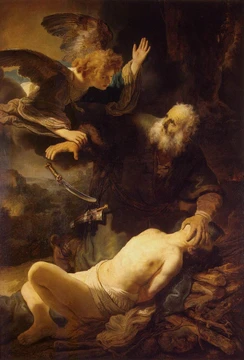
The Book of the Dead
Some knowledge is a wound that cuts straight through.

The Book of the Dead is a passive item in The Binding of Isaac that transforms the player's arsenal by granting the ability to hurl a spectral tome as a ranged projectile. Unlike Isaac's tears, which arc and scatter, the book flies in a focused, piercing line, rewarding players who favor precision over coverage.
Thematically, the item sits comfortably within the game's tapestry of occult artifacts and forbidden knowledge. In a world where a child descends into a basement that mirrors his fractured psyche, a book that carries death in its pages feels less like a weapon and more like a grim inheritance—something picked up not by choice but by the sheer gravity of the descent.
- Type
- Passive Item
- Category
- Projectile / Ranged
- Effect
- Grants a throwable book projectile that travels in a straight line
- Typical Location
- Shop or item pickups
- First appears
- The Binding of Isaac (2011) / Rebirth
- Rarity
- Uncommon
Lore & Background
In the basement world of The Binding of Isaac, items are not mere upgrades; they are fragments of a child's trauma made manifest. The Book of the Dead fits this pattern perfectly. It is a text that should not be opened, yet here it is, sitting in a shop window beside a bag of marbles and a rusted key, waiting for small hands to grab it. The implication is that the knowledge it contains—whatever death-ritual, whatever forbidden rite was scrawled into its pages—has already seeped into the environment. The basement does not merely contain the book; the book helped make the basement.
Fans often read the item as a commentary on how trauma is transmitted: not always as a scream, but as a quiet, inherited text. You pick it up, you carry it, and now you can throw it at the things that chase you. The dead do not haunt you; you haunt them, armed with their own scripture. In a game where the player is a weeping child in a world of grotesque, fleshy enemies, the Book of the Dead is one of the few tools that feels deliberately, almost liturgically, lethal.
Its straight-line trajectory also carries a quiet symbolism. Tears scatter, they forgive, they cover a wide area with soft, wet grace. The book does not forgive. It goes where it goes, and what it hits, it ends. In the grammar of Isaac's basement, that is a very different kind of power.
In Their Own Story
The shop was closed, or maybe it had never been open. The bell above the door had long since lost its tongue. Isaac stood in the doorway, tears drying on his cheeks in the stale basement air, and reached for the book on the counter. It was warm. Not sun-warm, not hand-warm. Warm the way a held breath is warm, the way a secret is warm. He opened it one page. The page was blank, then it was not, then it was a hand reaching up from the bottom of the well in his mother's basement, fingers splayed, asking to be let in. He closed the book. He picked it up. He threw it at the thing in the corner that had been watching him since the first floor, and the thing stopped breathing, and the basement exhaled, and the next room opened.
Reader's Guide
The Binding of Isaac is, at its core, a game about a child running from a mother whose love has curdled into something that looks, from the inside, like a monster. The basement is not a dungeon; it is a mind. Every room is a thought. Every enemy is a fear given teeth. And every item is a coping mechanism found on the floor of that mind, half-buried in grime.
The Book of the Dead reads as one of those mechanisms. It is not the most powerful thing in the game. It does not multiply your tears or grant you wings. It simply says: you can throw the thing that hurts you back at the thing that is hurting you. You can take the scripture that was used to justify the door being locked, the lock being turned, the child being sent down into the dark—and you can use it as a weapon. That is a very specific, very real form of emotional processing, rendered in pixel art and a straight-line projectile.
Edmund McMillen has spoken in interviews about how the game grew out of his own feelings of guilt, of being the child in the room while the adults did terrible things. The items in the game are not rewards; they are the things a child finds when they are alone in the basement, trying to make sense of the shapes in the dark. The Book of the Dead is one of those shapes. You do not choose to read it. You choose to throw it. And that distinction is the entire game, compressed into a single, quiet, lethal arc.
Did You Know?
- The Book of the Dead's straight-line projectile contrasts sharply with Isaac's default tears, which arc and spread—making it a precision tool in a game that otherwise rewards area coverage.
- In the broader item ecosystem, the Book of the Dead pairs well with items that increase projectile speed or damage, turning a single focused hit into a devastating one-shot.
- The game's shop items are generated randomly each run, meaning the Book of the Dead can appear in any shop on any floor, reinforcing the feeling that the basement's contents are not curated but simply… present, like memo
- The item's name deliberately evokes the ancient Egyptian funerary text, adding a layer of mythic weight to what is mechanically a simple thrown object—a small but telling example of how the game uses occult nomenclature
More in Lore & Story
Elsewhere in the The Binding of Isaac universe
Spotted an error? Know more?
This is a living reference — every entry is fact-audited, and reader corrections feed straight into our audit queue. Suggest an edit · See this site's audit record