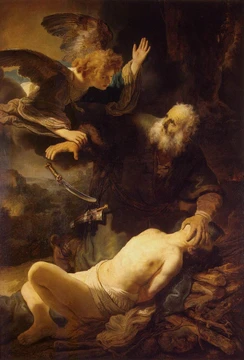
The Sacrifice Room
The altar is lit, the child is waiting, and the power is yours if you can bear the cost.

The Sacrifice Room is a special, one-of-a-kind room type in The Binding of Isaac that embodies the game's darkest thematic core: the idea that power is purchased through the loss of something innocent. Accessed through a distinctive door that sets it apart from ordinary floors, the room presents the player with a ritualistic altar and a small, helpless figure—typically a baby—that can be offered up in exchange for a powerful item.
It is the room where the game's central metaphor becomes mechanical. Isaac's journey through the basement and beyond is steeped in the biblical allusion of a child offered on a mountain, and the Sacrifice Room forces the player to enact that very act. Do you take the blessing, and what does it cost you? The room does not judge; it simply waits, altar lit, for your choice.
- Type
- Special Room
- Game
- The Binding of Isaac (Rebirth and subsequent versions)
- Mechanic
- Sacrifice a baby or character for a powerful item
- Access
- Distinctive special door, separate from standard room doors
- Risk
- Permanent loss of the sacrificed character for the run
- Reward
- A powerful random item (stronger if Isaac himself is sacrificed)
- Thematic Role
- Literalizes the biblical sacrifice motif central to the game's narrative
Lore & Background
In the world of The Binding of Isaac, the basement is a labyrinth of trauma, and the Sacrifice Room is where that trauma takes its most ritualistic form. The room is small, dim, and centered around a stone pedestal or altar that glows with an unholy warmth. A small baby sits or crawls nearby, oblivious, its wide eyes reflecting the candlelight. The door behind you seals shut the moment you step inside, and the only way out is through the altar.
This room draws directly from the Genesis narrative of Abraham and Isaac—the father commanded to offer his beloved son on Mount Moriah. In the game's reimagining, the dynamic shifts: it is not a father but a mother who drives Isaac into the dark, and the player is the one who must decide whether to complete the rite. The Sacrifice Room makes the player complicit. You are not merely watching Isaac suffer; you are the hand that places the child on the stone.
Fans often describe the room as the emotional nadir of a run. The items it grants are among the strongest in the game, and the temptation is real. But the act of sacrificing—clicking that button, watching the small figure dissolve into a shower of red particles—carries a weight that no other room in the game replicates. It is the moment the game stops being a roguelike and becomes a parable about what we are willing to destroy to win.
In Their Own Story
The door groaned open, and the cold of the basement rushed out to meet the warm, candle-lit air of the small chamber. Isaac stood in the doorway, his tears already falling, and behind him the long corridor of broken tiles stretched back into darkness. In the center of the room, the altar hummed. A baby sat cross-legged on the cold stone floor, humming a tuneless little song, its tiny hands clapping together. It looked up at Isaac. It always looked up at Isaac.
He knelt. The altar pulsed, patient as a heartbeat. He could feel the pull of it—the promise of something sharp and bright and powerful, waiting on the other side of the act. The baby's clapping slowed. It tilted its head, as if listening to a sound only it could hear. Isaac reached out. His hand trembled. The candle flames leaned toward him, eager.
He did not reach out. He stood, turned, and walked back into the dark. The door sealed behind him with a sound like a sigh. Behind him, the baby resumed its clapping, and the altar's glow dimmed to nothing.
Reader's Guide
The Sacrifice Room is where Edmund McMillen's design philosophy and the game's biblical skeleton intersect most painfully. The mechanic is simple: lose a character, gain an item. But the framing matters. The baby is not an enemy. It does not attack. It does not block your path. It simply exists in the room, small and soft, and the game asks you to end that existence for a power spike.
Thematic reading: The entire game is structured around Isaac's helplessness. He is a child in a basement, crying, unable to stop the descent. The Sacrifice Room inverts that powerlessness. For one moment, the player holds the knife. The question the room poses is not "can you win?" but "should you?" The items it grants are genuinely strong—often tier-one relics or character-defining pickups—but the run that includes that sacrifice feels different. The tears fall the same, but the weight behind them shifts.
Developer commentary across interviews and patch notes has consistently framed the game as an exploration of guilt, maternal trauma, and the stories we tell ourselves to survive. The Sacrifice Room is the most literal expression of that: a small, contained moment where the player must decide whether survival is worth the cost of innocence. It is the room fans remember longest, the one that haunts speedrun replays and casual play alike, because it is the only moment in the game where the player is the villain.
Practically, it is a risk-reward node. The item is powerful, but the lost baby is gone for the rest of the run, and if you sacrificed Isaac himself, the consequences are even steeper. In a long, deep run, that absence is felt. In a short, desperate run, it is the difference between victory and a wall of enemies you cannot break. The room does not care. The altar is the same either way.
Did You Know?
- The Sacrifice Room is one of the few room types in the game where the player's action is irreversible for the entire run—the sacrificed character does not return, even after floor transitions.
- The room's design deliberately echoes the biblical altar on Mount Moriah, tying the gameplay mechanic directly to the Genesis 22 narrative that gives the game its title.
- The baby in the Sacrifice Room is visually identical to the passive, non-hostile baby enemies found elsewhere in the basement, reinforcing the theme that the 'enemy' here is the player's own choice rather than a monster.
- Fans frequently cite the Sacrifice Room as the single most thematically resonant moment in the game, often describing it as the point where the roguelike loop breaks and the narrative weight becomes inescapable.
More in Lore & Story
Elsewhere in the The Binding of Isaac universe
Spotted an error? Know more?
This is a living reference — every entry is fact-audited, and reader corrections feed straight into our audit queue. Suggest an edit · See this site's audit record